How Weather Conditions Affect Asphalt Performance Over Time

November 24, 2026

When property owners invest in new outdoor surfaces, they expect the finished product to remain smooth and durable for many changing seasons. However, continuous exposure to fluctuating environmental elements takes a gradual but inevitable toll on even the most well-constructed driveways and lots. Understanding the complex relationship between regional climate patterns and material degradation is vital for maximizing the lifespan of any pavement project.


Analyzing the Impact of Intense Heat

Summer brings scorching temperatures that drastically alter the physical characteristics of outdoor surfaces. When the sun beats down unyieldingly, the dark coloration of the pavement absorbs immense amounts of thermal energy, causing the underlying binder to soften considerably. This softening process temporarily compromises the structural integrity of the entire surface, making it highly susceptible to deformation. Furthermore, constant thermal expansion during the hottest parts of the afternoon, followed by slight contraction when evening breezes cool the surface, creates a damaging cycle of internal stress.


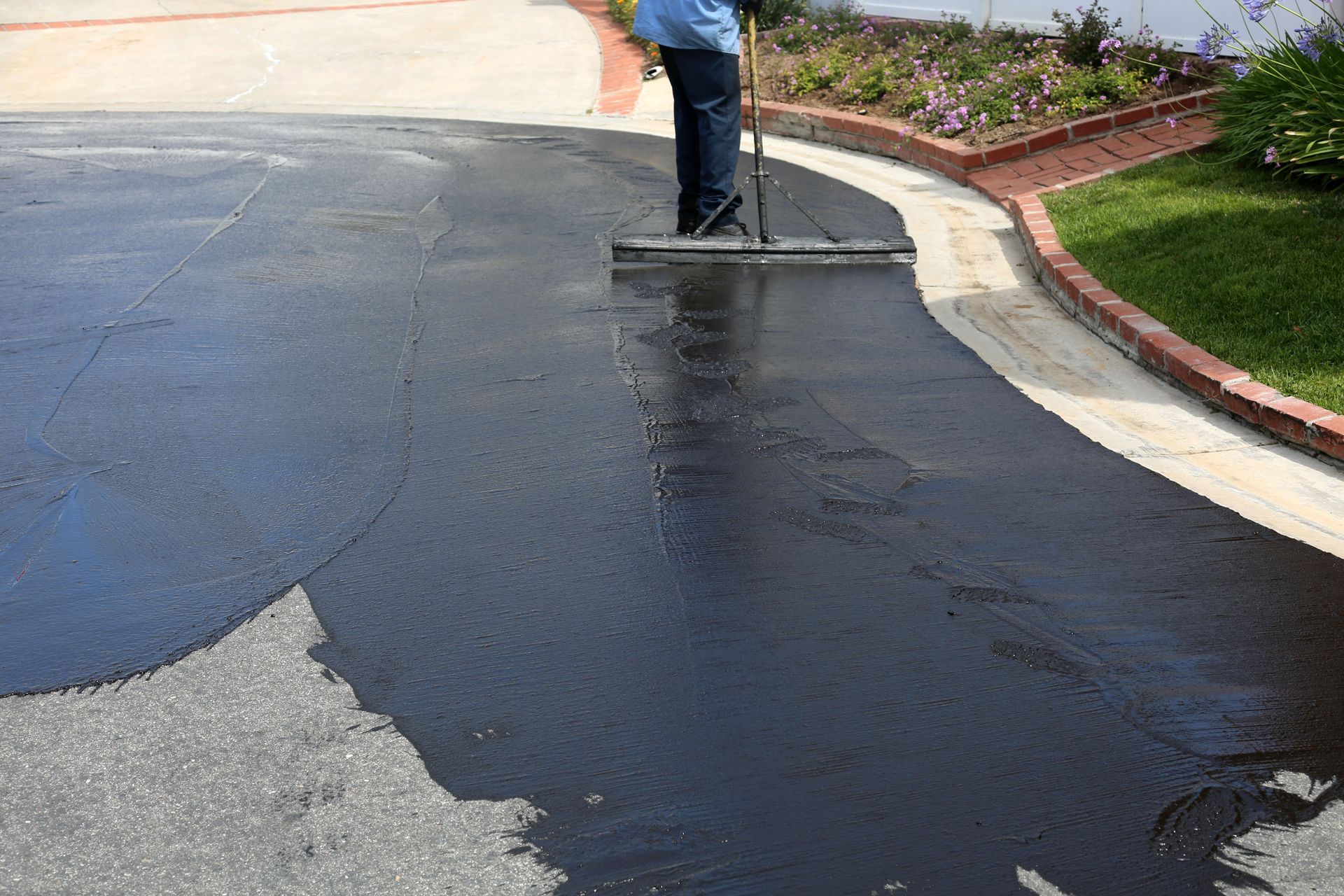
Over multiple seasons of extreme heat, this continuous flexing gradually weakens the binding agents holding the rock and sand aggregates together. Professional contractors who specialize in asphalt paving understand that proper initial installation is the first defense against thermal distress, yet even expertly laid surfaces remain vulnerable to extreme warming. Property managers must remain vigilant during peak summer months, checking for any signs of surface rutting or minor depressions. Without appropriate protective measures, continuous exposure to relentless heat significantly accelerates the natural aging process. Ultimately, intense warmth alters the chemical composition of the liquid binder, shifting it from a flexible, adhesive substance to a more brittle state once it finally cools down for the autumn season.

Examining the Effects of Freezing Cold

Winter introduces an entirely different set of environmental challenges that severely test the resilience of outdoor surfaces. As the temperature drops significantly, the previously flexible binder becomes extremely stiff and brittle, drastically reducing the pavement's ability to bend under heavy weight. This cold-weather brittleness is a primary reason why minor surface flaws quickly escalate into major structural failures during the darkest months of the year. The situation becomes even more dire when combined with the freeze and thaw cycle, a phenomenon occurring when accumulated moisture penetrates microscopic fissures.


When the ambient temperature dips below freezing, trapped water turns into ice, expanding with immense force and pushing surrounding materials apart. As ice melts during warmer afternoon hours, it leaves behind an enlarged void that weakens the fundamental structure. Experts in asphalt paving frequently warn that this repetitive expansion and contraction is the leading cause of massive pothole formation. The damage inflicted by freezing cold is often hidden deep beneath the surface, making it difficult to detect until a significant collapse occurs. Property owners must understand that winter weather acts as a relentless force, exploiting the tiniest weaknesses in the material. By the time spring arrives, the cumulative damage of the cold season is usually fully revealed, requiring extensive remediation to restore the surface safely.


Understanding the Role of Heavy Moisture

Rainwater and general moisture represent a constant, subtle threat to the longevity of exterior surfaces. While a properly constructed driveway or parking lot is designed to shed water efficiently, persistent rainfall and standing puddles can gradually penetrate the topmost protective layers. Once moisture infiltrates the porous structure, it begins to erode the crucial bond between the aggregate rock and the liquid binder. As water slowly washes away the adhesive elements, individual rocks and pebbles become loose and dislodged, leading to a rough, uneven texture known as raveling.


Furthermore, when standing water is allowed to pool in minor surface depressions, constant hydraulic pressure generated by vehicle tires passing through puddles forces moisture deeper into foundational layers. High-quality asphalt paving relies heavily on a dry, compacted subgrade to support the visible top layer, and any moisture intrusion into this foundation compromises the entire system. Proper drainage solutions, such as adequately sloped gradients and strategically placed catch basins, are absolutely critical for directing destructive rainwater away from the vulnerable material. Without these drainage features, the continuous presence of moisture will accelerate the deterioration process, washing away the structural integrity of the project long before its expected lifespan is reached. Defending against heavy moisture is a continuous battle requiring diligent observation and proactive landscape management to ensure water never has the opportunity to settle.


Exploring the Damage of Ultraviolet Rays

The sun is not just a source of intense heat; it also delivers a constant barrage of ultraviolet radiation that acts as a silent destroyer of exterior surfaces. While thermal energy causes the material to soften, ultraviolet rays attack the very chemical structure of the liquid binder holding the pavement together. Constant exposure to direct sunlight causes complex hydrocarbon chains within the binder to break down and oxidize, a process visually evident as the surface fades from a rich black to a dull, faded gray. This oxidation fundamentally alters the physical properties of the material, stripping away its essential flexibility and leaving it dry, brittle, and highly susceptible to cracking under pressure.


When investing in new asphalt paving, property owners must recognize that the clock on ultraviolet degradation begins ticking the moment the fresh surface is exposed to daylight. As the binder oxidizes, it completely loses its waterproofing capabilities, allowing rainwater to easily penetrate the increasingly porous surface and wreak additional havoc. The loss of essential oils and resins through sun exposure is an irreversible chemical change that cannot be fixed by simply patching visible cracks. Instead, the entire surface becomes compromised, shedding loose sand and small rocks as adhesive forces fail. Shielding the pavement from the relentless power of the sun is a primary goal of comprehensive property management, as unchecked oxidation will rapidly age the surface and necessitate premature replacement.


Implementing the Best Maintenance Strategies

Preserving the smooth, functional beauty of a driveway or parking lot requires a dedicated commitment to proactive maintenance throughout every changing season. Fortunately, property owners have access to proven methods that can significantly delay the aging process and protect their investment against the ravages of heat, cold, moisture, and sunlight. According to insights from Today's Homeowner, consistently applying a sealcoat every 2 to 4 years, along with immediately fixing any cracks, is crucial for defending your driveway and maintaining its overall value. This essential practice replenishes vital oils lost to ultraviolet oxidation while simultaneously creating a waterproof shield that prevents rain from penetrating the vulnerable sub-base.


Furthermore, diligent crack sealing prevents tiny surface fissures from expanding into massive potholes during destructive winter freeze and thaw cycles. When minor imperfections are ignored, they provide a direct pathway for moisture to undermine foundational layers, making rapid repairs a non-negotiable aspect of responsible property ownership. Exceptional asphalt paving is only as good as the long-term care it receives after the initial installation is completed. Ultimately, successful asphalt paving relies on a continuous partnership between high-quality initial construction and unwavering dedication to protective maintenance over the life of the project.


The continuous assault of intense heat, freezing cold, persistent moisture, and powerful ultraviolet radiation represents a formidable challenge to any outdoor pavement. By understanding how these specific environmental factors degrade the surface and actively committing to a routine of proactive defense, property owners can effectively preserve the integrity of their investments. Ultimately, a well-maintained surface will safely withstand the elements and provide a reliable, smooth experience for many seasons to come. For more information on the effect of weather over time on asphalt paving, please contact Bouchard Construction Inc.
land grading service
November 11, 2026
Discover how a professional land grading service helps prevent drainage problems, soil erosion, foundation damage, and other common landscaping issues.
November 10, 2026
Heavy traffic places constant pressure on roads, parking lots, and commercial surfaces. Without proper construction, these areas can develop cracks, potholes, and structural damage that affect safety and accessibility. At Bouchard Construction Inc, we understand the importance of building durable pavement that withstands daily vehicle demands. Professional paving requires careful material selection, structural planning, installation techniques, and ongoing maintenance. Our paving contractors service focuses on helping property owners understand the factors that contribute to stronger, longer-lasting paved surfaces. Understanding How Heavy Traffic Affects Pavement Recognizing the Impact of Vehicle Weight Traffic loads refer to the weight and frequency of vehicles traveling across paved surfaces. Passenger vehicles, delivery trucks, buses, and commercial equipment create different levels of pressure. Heavier vehicles place greater stress on pavement, particularly when they repeatedly travel along the same routes. Over time, this pressure can weaken surfaces and underlying support layers. Professional contractors evaluate expected traffic patterns to determine appropriate pavement thickness, materials, and structural requirements. Identifying Common Pavement Damage Heavy traffic contributes to several types of pavement deterioration. Rutting occurs when repeated vehicle loads create depressions along frequently traveled paths. Cracking develops when pavement experiences excessive stress, temperature changes, or inadequate structural support. Potholes can form when moisture penetrates damaged areas and weakens underlying materials. These problems often become more severe when heavy vehicles continue using compromised surfaces. Recognizing these conditions allows contractors to recommend appropriate repairs before extensive deterioration occurs. Evaluating Environmental Conditions Weather significantly influences pavement performance. Temperature fluctuations cause materials to expand and contract, while precipitation can introduce moisture into vulnerable areas. Cold weather may contribute to cracking, especially when water freezes beneath the surface. Excessive heat can soften certain asphalt mixtures, increasing susceptibility to deformation under heavy loads. Our paving contractors service considers environmental conditions alongside vehicle demands when evaluating pavement projects. Understanding Load-Bearing Capacity Load-bearing capacity describes how much weight a pavement structure can support without experiencing significant deformation or failure. Properly engineered surfaces distribute vehicle weight across multiple layers, reducing concentrated pressure. According to the Asphalt Pavement Alliance, Americans traverse more than 3 trillion miles of roadways annually, and about 94 percent of those roads are surfaced with asphalt. This widespread use demonstrates asphalt's importance in transportation infrastructure and reinforces the need for professional construction practices. Selecting Materials for Heavy Traffic Conditions Comparing Asphalt and Concrete Asphalt and concrete are commonly used for roads, commercial parking areas, and other heavily traveled surfaces. Each material offers advantages depending on project requirements. Asphalt provides flexibility, allowing pavement to accommodate some movement and temperature changes. Concrete offers substantial compressive strength and can perform effectively under demanding vehicle loads. Material selection depends on anticipated traffic, environmental exposure, maintenance expectations, and project budgets. Professional evaluation helps determine which option best supports long-term performance. Evaluating Asphalt Performance Asphalt is widely used because of its versatility, relatively efficient installation, and ability to accommodate different traffic conditions. However, asphalt performance depends on proper mixture selection, pavement thickness, base preparation, and compaction. Heavy commercial vehicles may require stronger pavement structures than ordinary passenger traffic. Our paving contractors service emphasizes the importance of matching pavement specifications to the conditions each surface will experience. Considering Reinforced Materials Some projects benefit from specialized asphalt mixtures, reinforcement systems, or concrete designs that improve resistance to demanding traffic conditions. Polymer-modified asphalt, for example, can improve resistance to certain forms of rutting and cracking when appropriately specified. These materials are not necessary for every application. Contractors assess whether additional reinforcement provides meaningful performance benefits relative to the project's requirements and costs. Balancing Durability and Cost Initial installation expenses represent only one component of pavement ownership. Maintenance requirements, anticipated service life, and potential repairs also influence long-term costs. Selecting inexpensive materials without considering traffic demands may lead to premature deterioration. Conversely, unnecessary upgrades can increase expenses without delivering proportional benefits. Professional planning helps property owners balance durability, performance, and financial considerations. Designing Pavement for Long-Term Strength Establishing a Stable Foundation A durable pavement begins beneath its visible surface. Soil conditions, drainage, and base materials determine how effectively the structure supports vehicle weight. Weak or poorly prepared foundations can lead to settlement, cracking, and deformation, even when high-quality surface materials are installed. Professional contractors assess underlying conditions and establish suitable preparation requirements before paving begins. Distributing Heavy Vehicle Loads Effective pavement design distributes traffic pressure throughout the structure rather than allowing excessive stress to accumulate in isolated areas. Multiple pavement layers work together to support vehicles and transfer loads toward the underlying soil. Areas experiencing frequent truck movements, loading operations, or concentrated wheel pressure may require additional structural capacity. Our paving contractors service recognizes that traffic intensity and vehicle weight must influence pavement design decisions. Managing Surface Drainage Water management is essential for protecting pavement foundations. Standing water and inadequate drainage can weaken supporting materials, accelerate cracking, and contribute to pothole development. Proper grading helps direct runoff away from vulnerable areas. Depending on site conditions, drainage systems may also be necessary to prevent excessive moisture accumulation. Addressing drainage during construction can reduce future maintenance concerns and support pavement stability. Preventing Premature Structural Failure Pavement failures frequently result from combinations of excessive loading, inadequate foundations, moisture infiltration, and environmental stress. Professional design considers these interacting factors rather than addressing surface appearance alone. Anticipating potential problems helps contractors select appropriate materials, determine structural requirements, and establish construction specifications that support reliable performance. Applying Professional Construction Techniques Preparing the Installation Area Site preparation establishes the foundation for successful paving. Contractors evaluate existing surfaces, remove unsuitable materials when necessary, and prepare the underlying soil. Proper grading and base installation help create a stable platform for subsequent pavement layers. Preparation requirements vary according to soil conditions, existing damage, drainage needs, and expected vehicle loads. Our paving contractors service emphasizes professional site evaluation because problems beneath the surface can compromise even carefully installed pavement. Installing and Compacting Pavement Layers Compaction increases pavement density and helps materials resist movement under repeated traffic loads. Professional crews use specialized equipment to achieve appropriate compaction throughout the pavement structure. Equipment selection and installation procedures depend on material characteristics and project specifications. Insufficient compaction can leave excessive air voids or unstable areas, increasing the likelihood of deformation and premature deterioration. Maintaining Construction Quality Quality control helps ensure that materials and installation practices meet project requirements. Contractors may evaluate material consistency, layer thickness, surface elevations, compaction, and drainage performance throughout construction. Identifying deficiencies early allows corrections before they affect the completed pavement. Consistent oversight contributes to stronger surfaces and more predictable long-term results. Coordinating Commercial Paving Projects Commercial properties often require careful scheduling to minimize interruptions to deliveries, employees, customers, and surrounding traffic. Professional contractors consider equipment access, construction phases, site safety, and appropriate curing or cooling periods before reopening paved areas. Clear communication helps property owners understand project timelines and temporary access restrictions. Maintaining Pavement Under Heavy Traffic Scheduling Regular Inspections Routine inspections help identify cracks, drainage concerns, surface depressions, and other developing problems. Heavy-use areas deserve particular attention because repeated loading can accelerate deterioration. Property owners benefit from professional assessments that distinguish cosmetic wear from conditions requiring structural repairs. Our paving contractors service encourages proactive pavement management to help protect long-term property investments. Addressing Damage Promptly Minor pavement damage can worsen when moisture and heavy vehicles continue stressing compromised areas. Depending on the severity, professional repairs may include crack sealing, patching, resurfacing, or more extensive reconstruction. The appropriate treatment depends on whether deterioration affects only the surface or extends into supporting layers. Planning Preventive Maintenance Preventive maintenance helps preserve pavement condition and reduce avoidable deterioration. Maintenance schedules should reflect traffic volume, environmental exposure, pavement age, and existing surface conditions. Professional contractors can evaluate whether protective treatments, drainage improvements, or targeted repairs are appropriate. Supporting Long-Term Performance Durable pavement requires more than strong materials. Successful projects combine appropriate design, careful installation, and ongoing professional attention. At Bouchard Construction Inc, we recognize that every paved surface faces unique challenges. Our paving contractors service prioritizes understanding those conditions and helping property owners make informed decisions. Whether a project involves commercial traffic areas, access roads, or frequently traveled pavement, professional planning is essential for dependable results. Contact Bouchard Construction Inc to discuss your paving needs and learn how experienced contractors can help create surfaces designed for demanding traffic conditions.
paving company
July 22, 2026
See how a professional paving company can improve your driveway, enhance curb appeal, and help increase your home's value with lasting results.
March 17, 2026
From patios and fire features to walkways, a masonry installation service offers endless possibilities to elevate your yard into a living space you love.
masonry services
January 28, 2026
In this article, we'll demonstrate why investing in skilled masonry services is crucial for developing resilient and sustainable buildings.
land grading services
November 11, 2025
Do you have questions about land grading? Read this blog to learn more about the four reasons you need land grading services before building.
local paving contractor
June 16, 2025
If you're ready to upgrade your home's exterior, working with a reputable local paving contractor is a smart move. Keep reading to learn more!
asphalt paving contractors
November 12, 2024
Read our blog to discover why quality paving is so important for businesses. If you need reliable asphalt paving contractors, contact us today!
paving company
November 7, 2023
If you've decided on hiring a paving company for your property, there are some key details to learn about your contractor of choice. Read here to learn more!
asphalt paving contractor
May 25, 2023
Wondering if you need a new driveway? Before you reach out to an asphalt paving contractor for service, here are four signs to watch for.